Seeing AGI (3) - Time To Build AI Native Team

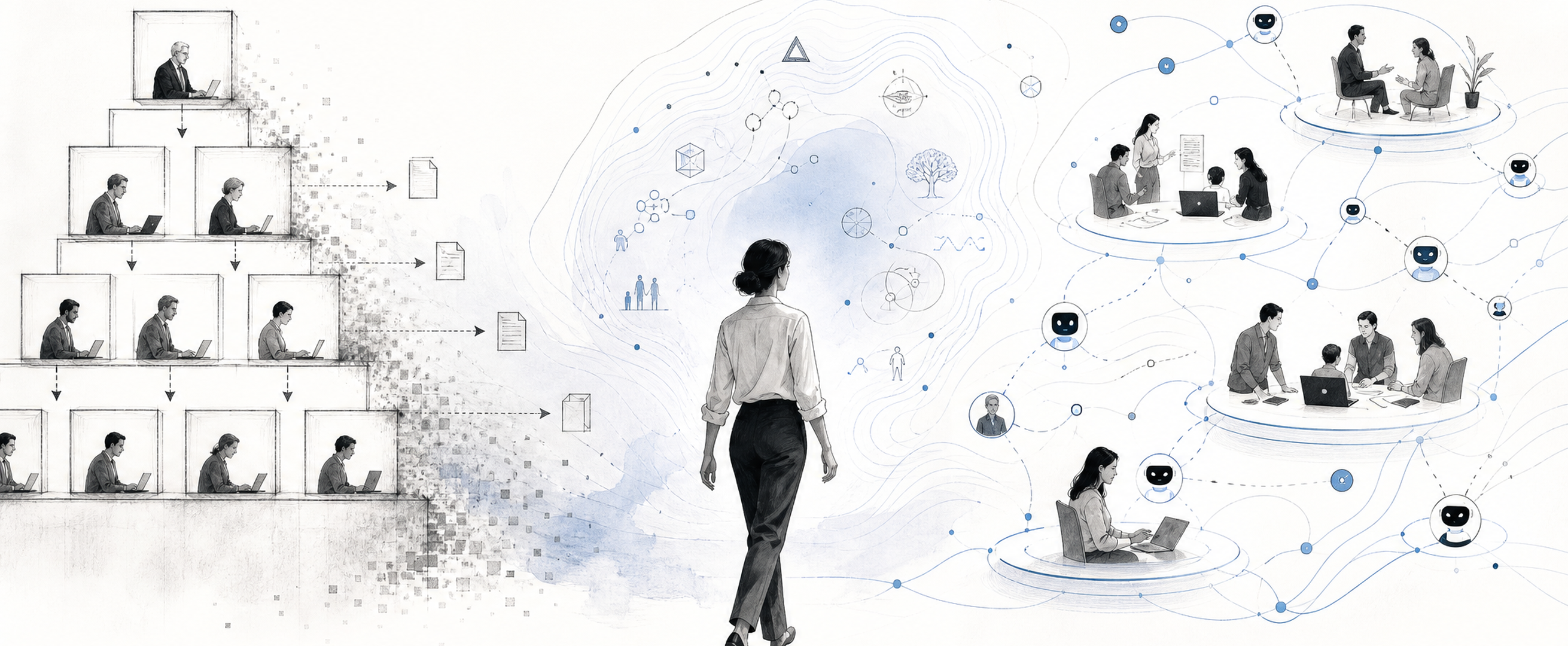
"Building AI-native teams isn't just about adopting new tools—it's about fundamentally rethinking how we organize, scale, and execute. From my experience nearly 20 years in Search, Hardware, and AI, and from managing thousands of people across different-sized companies, I've learned that small, well-structured AI-native teams can achieve 10x efficiency compared to traditional large organizations. The key is starting from scratch, changing mindsets, and fully embracing AI capabilities."
I'm someone with an extreme thirst for work efficiency. Ideas are cheap, but execution makes all the difference. Based on my work experience across different stages and scales of companies, I deeply believe that in the AI era, AI-native organizations will revolutionize our work efficiency. How to build AI-native organizations is the core experience I want to share—if this can help you even a little bit, then this article will have been worthwhile.
My Background: Three Stages of Team Building
After graduating in 2006, I joined Microsoft and was promoted essentially every year. By my 7th year, I had already become a Principal Dev Manager. I have no ego about managing people—I only care about products being recognized by users. In my final two years (2013-2014), I broke convention by pioneering a flat organization structure with up to 30-40 direct reports (while other managers typically had 8-10). This structural change had an immediate impact on work efficiency, and during this period we invented possibly Microsoft's first AI chatbot, Microsoft Xiaoice, which achieved tremendous success in Asia.
At my previous company, I built and scaled a team from zero to over a thousand people. I had zero hardware experience before starting an AI hardware company that sold over 40 million units and became the market leader. This taught me invaluable lessons about team structure, scaling challenges, and maintaining efficiency during rapid growth. During the same period, I heard that Amazon's Alexa+Echo team had over 5,000 people, with some saying it was even over 10,000. From this comparison, our per-person work efficiency was at least 5 times theirs.
Currently, at my new $500M AI startup genspark.ai, we have only 24 people, but in the past 10 weeks, we've launched 8 major products: AI Browser, AI Secretary, AI Personal Calls, AI Download Agent, AI Drive, AI Sheets, AI Slides, and Super Agent. One person built our AI browser in three months, one PM delivered AI slides in two weeks. With full AI assistance, individual productivity can potentially reach 10:1 or better compared to traditional large organizations.
These experiences across different scales and eras have taught me that efficiency is the KEY to driving innovation and serves as one of the core competitive advantages of a company. With AI, we're at a unique inflection point where small, well-structured teams can achieve what previously required much larger organizations.
How to Build AI-Native Teams
1. Start Small and Build From Scratch
In my experience, the most effective approach is to start with a small, dedicated team rather than trying to transform existing large groups. At my previous company, I attempted to retrofit AI practices into established teams but was unsuccessful. I found that changing mindsets is extremely difficult, if not impossible. Getting everyone to embrace uncertainty goes against human nature—people naturally crave security. Eventually, you'll discover that trying to transform your current organization not only slows you down but often leads to the same result: failed transformation.
The Genspark Model: 24 people, 10 weeks, 8 major products. We average 1-3 people per product and keep iterating rapidly. From a work efficiency perspective, our individual efficiency is potentially 10 times that of traditional large companies.
My Recommendation: If you have the chance, you should start a new parallel organization from scratch. Select people who are passionate about the future and willing to take risks—build your own "Ocean's Eleven" team (I love this movie). Provide them with sufficient incentives, both financial and intellectual. Start from one seed and grow into a small task force. You'll gradually experience the complete transformation in AI-native organizational efficiency. As your confidence grows, you can replace the original organization with the new AI-native one at the right time.
2. Manage the Transition Between Old and New Ways of Working
If you still believe that transforming your existing organization is the better approach for your situation, here's what I've learned from both my successes and failures in managing these transitions:
First, set realistic expectations—most transitions fail. Organizational transformation is one of the hardest challenges in business. Based on my experience, success rates are low, timelines are always longer than expected, and resistance will be stronger than you anticipate. If you choose this path, commit fully and prepare for a marathon, not a sprint.
My Recommendations:
Create psychological safety for everyone involved. This is perhaps the most critical factor. Fear of job loss, fear of becoming irrelevant, and fear of change will create natural resistance. Address these concerns directly:
- Communicate the vision clearly: Explain not just what's changing, but why it's necessary and what success looks like
- Provide retraining opportunities: Invest in upskilling programs for existing team members
- Be transparent about purpose and plan: Don't overpromise on speed or underestimate the challenges
Test your leadership empathy. Often, transformation failures aren't due to employee unwillingness to change—they're due to leaders who lack empathy and haven't figured out how to provide sufficient psychological safety. Ask yourself: Are you truly listening to concerns? Are you providing adequate support? Are you modeling the change you want to see?
My honest advice: If you can start fresh (option #1), do that instead. But if transformation is your only viable path, go all-in with realistic expectations and genuine care for your people.
3. Leadership in AI-Native Teams Requires a Different Approach
From my experience, leading AI-native teams requires a fundamental shift in leadership style. I've had to change my own approach first before expecting others to change. The biggest lesson I'm still learning is that in AI-native teams, leaders need to be facilitators and experimenters rather than traditional command-and-control managers.
Leading by example is absolutely critical. I use AI tools in my own work every day and experience firsthand how they impact my productivity and decision-making. You cannot ask your team to be AI-native while you remain stuck in old ways of working. People won't believe you just because you say the right things.
My Recommendations:
Here's what I'm learning works (though I'm still experimenting):
- Invest time in learning alongside your team: I spend serious time understanding AI capabilities, and since 2023, I've used nearly 1,000 products (my sources are X/Twitter and Product Hunt). When your team sees you genuinely learning, they sense the urgency too
- Be a practitioner, not just a preacher: I show my team specific examples of how AI has improved my own work, but I also share when I struggle or make mistakes with AI tools
I'm still learning this myself, but the key insight seems to be that AI-native leadership isn't about managing people using AI—it's about becoming an AI-native learner yourself first, then creating space for others to learn alongside you. Your authenticity about both your successes and your ongoing learning journey will be the foundation of your team's transformation.
4. Embrace AI Tools Fully
In my experience, the teams that get the best results are those that fully embrace AI capabilities. At Genspark, AI writes more than 80% of our code. Everyone engages in "vibe-coding"—CEO vibe-coding, designer vibe-coding, PM vibe-coding. The traditional hierarchy has fundamentally shifted: in the past, CEOs and architects managed people; now everyone manages AI agents.
This transformation has led to genuine 10x efficiency improvements.
What full AI embrace looks like in practice:
- Use the most advanced AI tools and models available: We invest in the latest AI tools and models, and the company pays for premium access
- Share learnings publicly: We document and share our AI integration experiences to accelerate team learning
I've heard that some large organizations block access to the latest AI tools. This approach is fundamentally against future trends. As AI evolves exponentially, these organizations will inevitably fall behind. Future competitiveness will directly correlate with how openly companies embrace AI.
The reality is stark: only organizations that boldly adopt the best AI tools can ride the positive flywheel of our era. The choice is binary—embrace AI fully or get left behind.
Final Thoughts
Building AI-native teams is one of the most exciting challenges I've encountered in my career. What I've learned is that success requires strong leadership conviction, genuine empathy for team members, and practical methods for managing change.
The future belongs to teams that can effectively combine human insight with AI capabilities. Based on my experience, the organizations that master this balance will have significant advantages in the years ahead.
Time waits for no one. The window for building AI-native competitive advantages is open now, but it won't stay open forever.